Instruments – Qifteli, Def & flutes from the Balkan tradition
Welcome to our Instruments category – here you’ll find handpicked musical instruments from the Albanian and Balkan tradition: the two-string Qifteli (in several sizes), the frame drum Def, and wooden flutes for the characteristic, warm Balkan sound. Whether you want to play your first melodies, accompany family celebrations and weddings, or own an authentic piece of culture as a collector – this collection combines sound, craftsmanship, and history.
Why these instruments are special
Each instrument was selected with a focus on playability, durability, and authentic tone. The Qifteli with its two strings delivers distinctive, present melodies – perfect for traditional songs from Albania and Kosovo. The Def (also Daf/Daire) provides driving rhythms with variable strokes, buzzing, and sound effects. Wooden flutes bring the bright, clear voice of shepherd and dance music. All models are made for everyday use: sturdy woods, clean edges, pleasantly grippable surfaces – so practicing, rehearsing, and performing are enjoyable.
🎶 Who is the "Instruments" category for?
Beginners looking for a direct connection to Balkan melodies and a straightforward instrument to start with. Advanced players who want to expand their sound with an authentic setup. Ensembles & clubs accompanying weddings, cultural evenings, and festivals. Collectors who value craftsmanship, regional origin, and fitting details.
Qifteli – two strings with great character
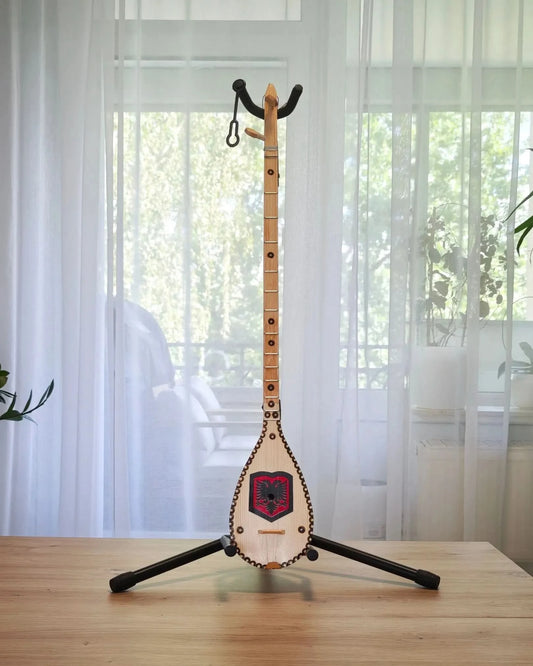
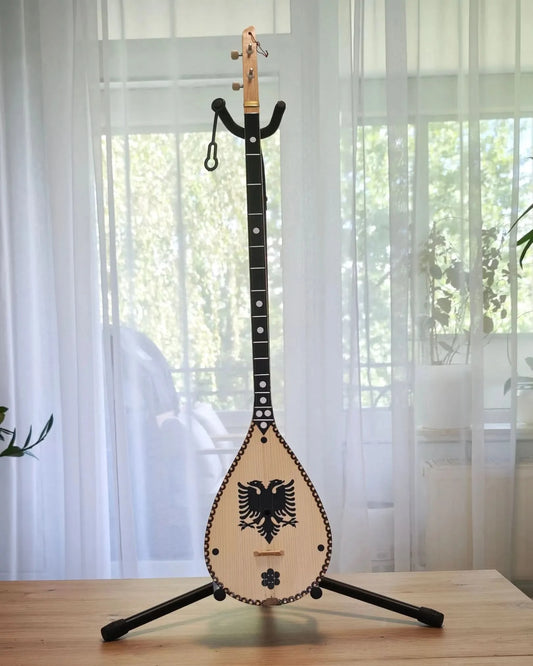
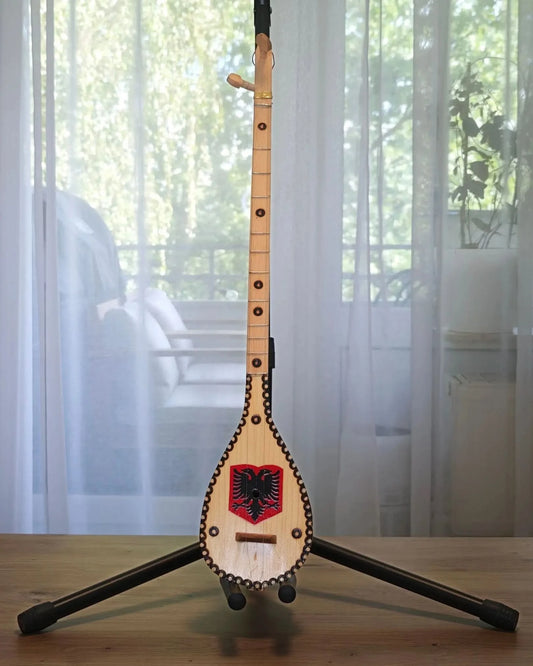
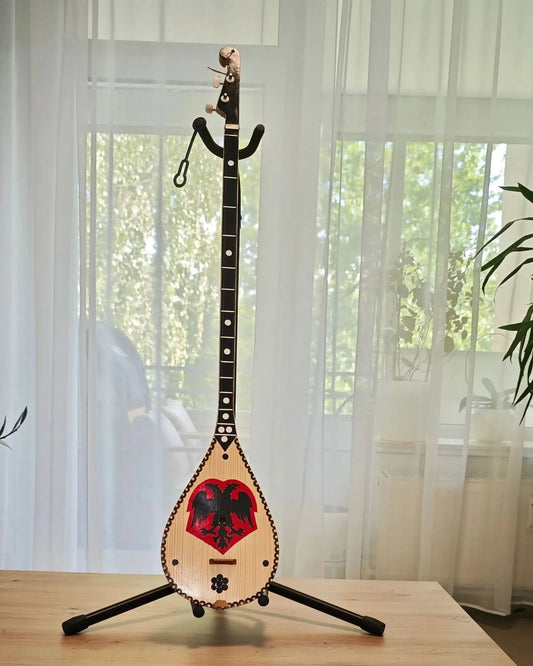
The Qifteli (also Çiftelia) is a two-string plucked instrument native to Kosovo, Northern Albania, and parts of North Macedonia. Its sound is bright, direct, and stands out excellently in groups. Traditionally played with a pick, often in fast, rhythmic articulation for dance pieces – but singable, lyrical lines are also typical. Our range offers the Qifteli in several lengths – from S to XL – so you can find the right scale length for hand size, playing feel, and stage presence.
📏 Sizes & playing feel: S, M, L, XL
-
S (approx. 65 cm) – short, light, ideal for youth, small hands, or travel/session instrument. Quick fingering, agile runs.
-
M (approx. 80 cm) – balanced standard size: comfortable scale length, clear intonation, good mix of sustain and handling.
-
L (approx. 93 cm) – longer and fuller in tone, more sustain; popular with players who like a slightly “larger” fingerboard.
-
XL (approx. 100 cm) – stage presence, full projection, striking look; ideal for solo features and large spaces.
Tip: If you travel a lot or play mostly sitting down, M often feels the most natural. For recording and stage, L and XL provide extra carrying power.
🎼 Tuning, pick & technique
In practice, open tunings are preferred, allowing fast patterns and drone effects. Many players use a medium-thick pick (0.7–1.0 mm) for defined attack without too much “click.” Typical are alternate strokes, trills, and slide embellishments. For Balkan dances, accents can be quite pronounced – the Qifteli may “lead.”
🛠️ Construction & care
Our Qifteli are made from sturdy woods with cleanly glued rims and smooth fingerboard edges. Care: Wipe dry after playing, protect from extreme heat/moisture, change strings regularly (they sound fresher and intonate better). For transport, we recommend a padded bag.
Def – rhythm driver for dance & tradition
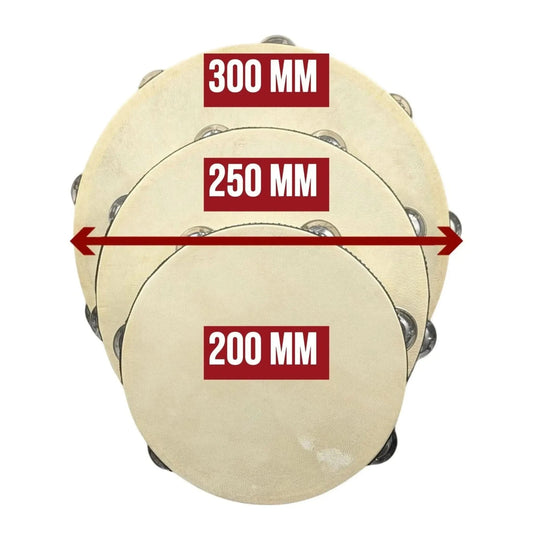
The Def is a frame drum with tightly stretched skin. It delivers a wide range of sounds from gentle pulse to energetic groove – through finger, palm, rim, and tapping techniques. In ensemble settings, the Def holds pieces together, highlights transitions, and instantly creates a festive mood.
🥁 Playing tips & sounds
For deep basic strokes, use the palm near the center of the skin; rim strokes bring highs and define the pulse. Flowing patterns arise with finger rolls and ghost notes. If you like, use jingle rings (model-dependent) to create extra sparkling textures.
🧰 Care & handling
Keep the skin dry and protect it from extreme moisture. After the gig, air it out briefly, then store it in its case. Light dust can be wiped off with a dry, soft cloth. Watch the skin tension during temperature changes; small adjustments affect the playing feel – this is normal and part of the Def’s character.
Traditional wooden flutes – clear melody, warm breath
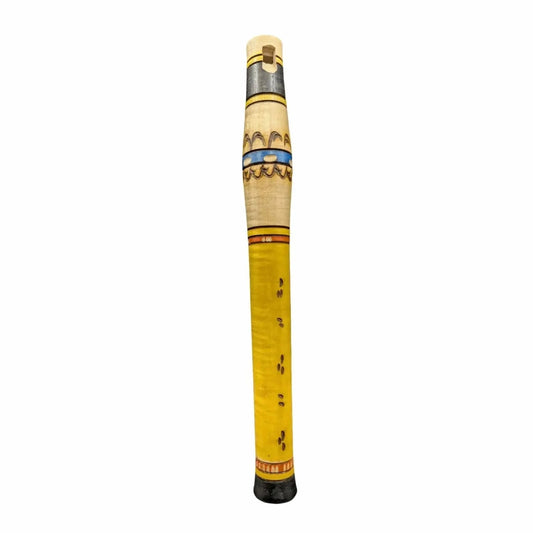
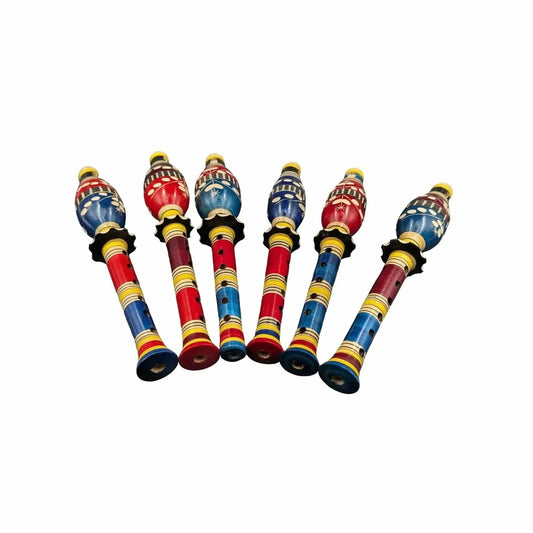
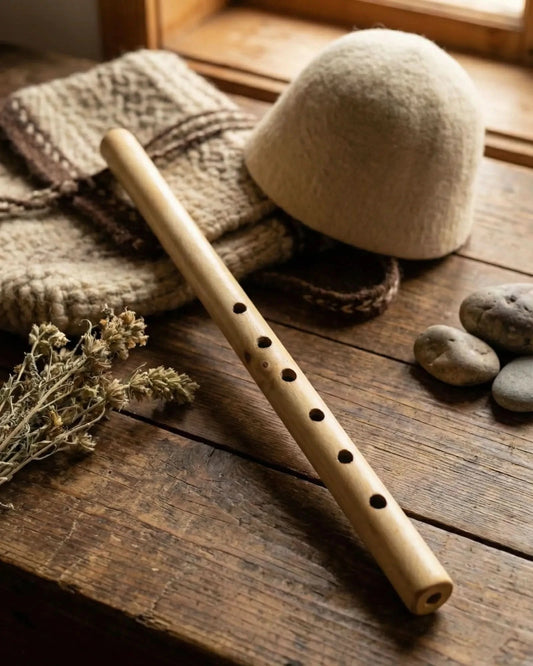
Our Balkan wooden flutes – in narrow and wide bores – cover a wide range from bright, pastoral melodies to driving, danceable lines. The narrow bore sounds focused, brilliant; the wide version carries a bit fuller, with a slightly darker timbre. Ideal for solos, dialogues with Qifteli, or as a contrast to the Def.
🎯 Beginner-friendly & flexible
Simple fingerings, direct blowing behavior, and low maintenance make wooden flutes perfect beginner instruments. At the same time, advanced players benefit from the expressiveness: bending, vibrato, dynamic phrasing, and articulation with tongue/palate – the expressive possibilities are surprisingly vast.
🌲 Wood & care
Depending on the model, hard, stable woods are used. Occasionally care for flutes with a little suitable oil (according to manufacturer’s instructions) to avoid cracking; let dry briefly after playing. Avoid large temperature changes (e.g., ice cold → heating air).
Outlook: more instruments in planning
We continuously expand the category. Planned are, among others, the Lahuta (a traditional, bowed single-stringed instrument), the Kaval (open rim flute with a soft, earthy tone), further variants of the Çiftelia/Qifteli, percussion (frame and hand drums, small effects) as well as accessories like bags, stands, picks and possibly mic clips for stage and recording. If you are looking for a specific instrument, feel free to give us feedback – we align procurement with the community.
Typical fields of use
-
Weddings & family celebrations: Qifteli + Def as groove team, flute for melody/response
-
Cultural and club evenings: solo features, small acoustic ensembles, storytelling concerts
-
School & workshops: introduction to rhythm/melody, intercultural music education
-
Studio & content: characterful overdubs, social reels, live sessions
🎤 Microphone & stage
Qifteli: pick up slightly to the side in front of the sound hole (condenser, 20–30 cm), live preferably combined with piezo/clip mic. Def: front side at 10–20 cm distance, vary angle depending on bass/treble balance. Flute: to the side in front of the labium/blowing hole, not directly in the airflow; this keeps the tone soft and natural.
Matching accessories & useful bundles
-
Qifteli + bag + pick set: protection & consistent playing feel
-
Def + case + mic clip: quickly ready to play, stage-ready
-
Flute + cleaning kit + soft case: easy care, safe storage
-
Instrument + sheet music/tab guide: quick start, motivational boost
Quality & selection criteria
We check instruments for intonation, ergonomics, material quality, and sound consistency. Fretboard edges, frets, glue joints, and surfaces are inspected; for flutes, we ensure clean blowing response and balanced registers; for the Def, we check skin tension and dynamic stability. This way you can be sure: when it says “active” here, the instrument is ready for rehearsal, performance, and lessons.
FAQ – Frequently asked questions about our instruments
Which Qifteli size should I choose?
S for kids, small hands, or as a travel instrument; M as an all-round standard; L/XL for more presence and sustain. If you’re unsure, start with M – it fits most players very well.
Is the Def suitable for beginners?
Yes. Basic patterns are easy to learn, and you can gradually progress to more complex ones. A big advantage of the Def: it works solo and in ensemble equally well.
Which flute is better: narrow or wide?
Narrow bore = focused, a bit brighter; wide bore = fuller, slightly darker. For beginners, the narrow is often a bit easier to start with; for expressive solos, many prefer the wide version.
Do I need to read music?
Not necessarily. Many traditional pieces are learned by ear. Tabs, fingering charts, and simple audio loops help beginners. If you want, you can add notation/modes later.
How do I care for my instrument long-term?
Protect from moisture/heat, wipe dry after playing, store in appropriate cases. Occasionally oil flutes (manufacturer’s instructions), change Qifteli strings, don’t overtighten Def skin – this keeps sound and playability stable for years.
Music with context – why traditional instruments matter today
Traditional Albanian instruments connect generations: grandparents recognize melodies, children learn rhythm and ear training, communities celebrate shared roots. At the same time, Qifteli, Def, and wooden flutes are contemporary – they work in acoustic pop, world music, film sound, and social content. Anyone who has experienced a Qifteli melody floating over a Def groove with a flute answering knows: This is more than nostalgia – it’s living present.
💡 Practical ideas for lessons & community
School: simple call-and-response motifs, Def ostinatos, flute drones for breath training.
Club: repertoire evenings with changing solos, family workshops (rhythm + melody).
Recording: short Qifteli hooks as loops; flute layers for intros; mix Def patterns with handclaps.
Summary – authentic instruments, inspiring possibilities
Whether you’re taking your first steps, want to revive old repertoire, or are looking for a distinctive live setup: Our Qifteli, Def, and wooden flutes are powerful, reliable partners. They fit perfectly in living room sessions, on stages, in clubs, studios, and your travel bag. Discover instruments that carry history – and at the same time shape your sound today.


 Sold out